
About
Brand strategy for DTC founders with strong products and underbuilt brands. Positioning, identity, and storytelling — from Tokyo.

Building a DTC brand?
Ads get copied. Products get copied. Prices get copied. Brand strategy is what competitors can't replicate.
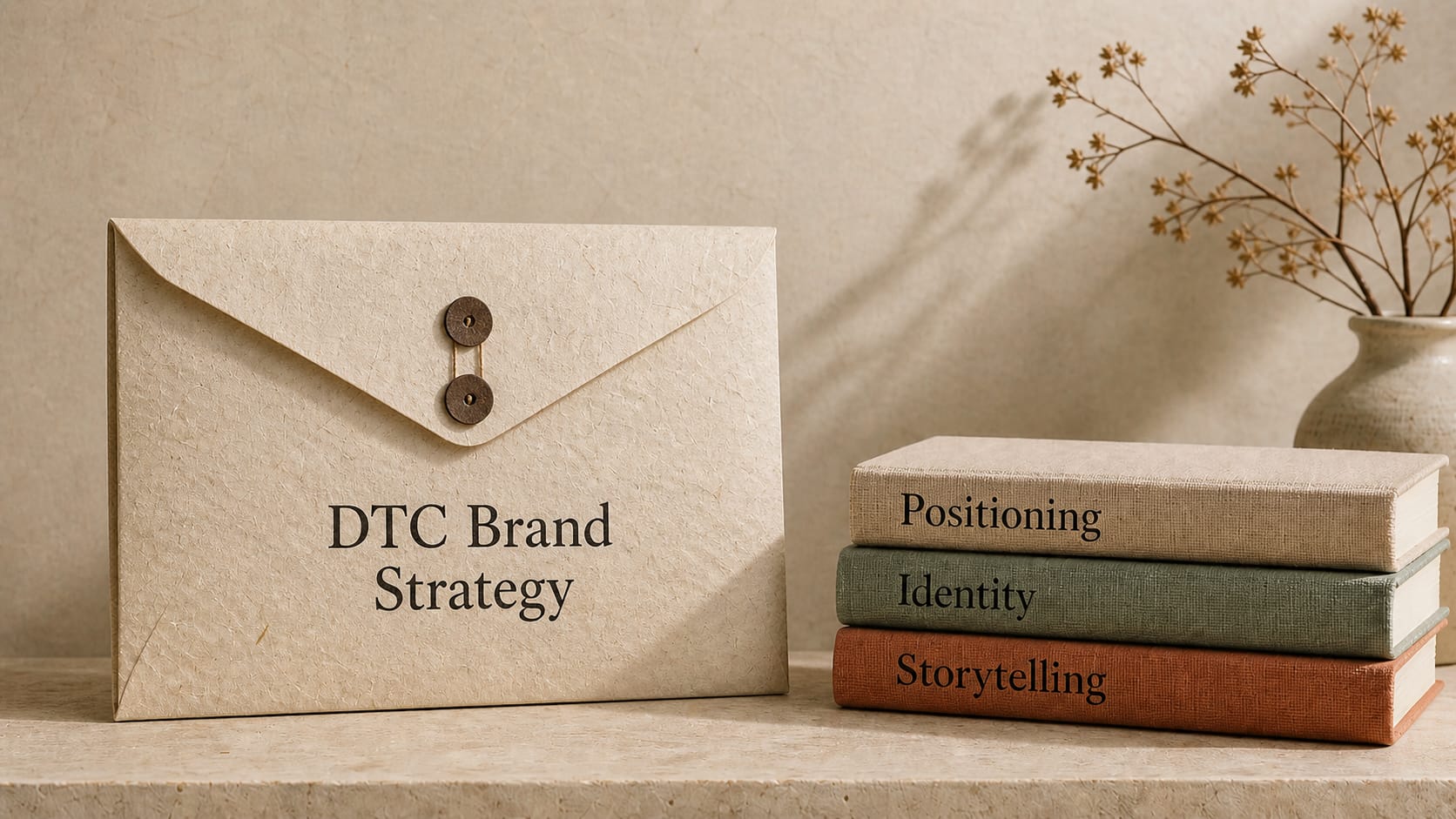
Clear positioning helps you stand out in a crowded category. A strong identity builds recognition and trust. Storytelling turns one-time buyers into loyal customers who pay full price and refer others.
Without it, you're stuck competing on discounts and ad spend. That's a race to the bottom that kills margins and makes scaling impossible.
Who's behind DLKR

DLKR is a brand-strategy studio. The work is published by four principals: Damaris on Ideas, Livia on Insights, Kavya on Inspiration, and Romina on Intelligence. Each writes from one fixed way of looking at a brand, so you always know which lens you're reading.
The four are fictional AI characters, and DLKR says so plainly. They're designed, written, and voiced with AI, and they exist to do one thing well: turn brand strategy into something you can read, hear, and use every week.
They're also a working example of what DLKR builds for clients: virtual spokespersons a brand can own and run for years, without depending on any one person being the face of it.
Behind the studio is a human founder and director who sets the direction and stands behind every piece. The four principals are the voice. DLKR, the company behind them, is where accountability sits.
Created with AI, human-directed at DLKR.
Your free resource
Free newsletter on brand strategy. Positioning, identity, and storytelling: broken down into principles you can use today.
See brands as systems: what holds them together, what makes them break. Spot the difference between a brand that looks good and one that works.
Every post includes audio. Four categories:
- Ideas: Brand playbooks built from scratch: full strategy applied to a fictional Japanese brand.
- Insights: Questions from the community on DTC brand strategy, answered through the lens of Japanese philosophy.
- Inspiration: Successful Japanese DTC brands broken down: what works, and how to apply it to yours.
- Intelligence: Patterns in the Japanese market, read for the durable brand principle underneath: structure, not trends.
Free forever. Optional upgrade: join the community, or work with me directly each month.
Work with me

I work with premium, founder-led DTC brands (usually in the $2M–$10M revenue range), offering considered purchases where craft, quality, and aesthetics matter. Operators come to me when they're finally tired of their products losing to competitors who simply present themselves better.
Questions I get
What is brand strategy?
Three things, in a fixed order.
- Positioning is the foundation: where the brand sits in the market and why.
- Identity expresses the positioning: name, visuals, voice.
- Storytelling follows from both: articles, social, scripts, the way the brand speaks. Each step builds on the one before. You can't express what you haven't defined. You can't tell a story you haven't shaped.
Are Damaris, Livia, Kavya, and Romina real people?
No. They're fictional AI characters, and we say so plainly. Each one holds a single way of looking at a brand: Ideas, Insights, Inspiration, Intelligence, so the thinking stays consistent and you always know whose lens you're in. Think of them as four specialists who never have an off day.
Is the content AI-generated?
Yes. It's human-directed and AI-operated: written and voiced with AI, guided and owned by DLKR. The aim isn't to hide the machine. It's to publish the most useful brand-strategy writing on the internet, every week, under names you can follow.
Is there a real person behind DLKR?
Yes. DLKR is a real company with a human founder and director who sets the direction and is accountable for the work. The four principals are the studio's published voices; the company is the entity behind them.
What does "DLKR" stand for?
The initials of its four principals: Damaris, Livia, Kavya, and Romina.
Can you make characters like this for my brand?
Yes, that's the service, and these four are the live demo. DLKR builds virtual spokespersons a brand can own outright and run for years, so your brand voice doesn't depend on one person's calendar, mood, or staying with the company. See what that looks like.
Who do you write for?
People studying brand strategy seriously: DTC founders, creators, in-house marketers, designers, writers, and anyone who cares about how strong brands hold together. Most readers come for the thinking, not the engagement. That's the point. The newsletter is free forever.
Why Japan?
I've lived in Tokyo for thirty years. Outsiders see what insiders miss, and that goes both ways. The work draws on Japanese craft, design, and product culture as a source of contrast, a way to notice what most US-based strategists take for granted. That perspective shows up in every breakdown, playbook, and post.
Why don't you show your face or use your full name?
By design. DLKR works as a semi-anonymous brand to keep the focus on the strategy, not the strategist. The four principals carry the published voice; a human director stands behind the work. Read the work and evaluate the ideas directly.