
How I'd rebrand a 200-year-old Japanese knife maker
A full brand playbook for taking a heritage Japanese knife maker from regional craft producer to global DTC brand.
Created with AI, human-directed at DLKR.
You’ve built something genuinely good, and your brand doesn’t show it. The care is all in the product; online, the brand reads generic, or barely reads at all. Closing that gap is the work, and it runs in a fixed order you can follow yourself. To make it concrete, I’ll build a brand from nothing on a worked example: a two-hundred-year-old Japanese knife maker almost no one outside Japan has heard of.
Hypothetical situation: A heritage knife maker contacts me. They've been in business for over two hundred years. The current owner is the eighth-generation master.
They supply professional kitchens across Japan. Outside Japan, no one knows they exist.
Their website is in Japanese only. No English social media. No presence on any Western marketplace. The quality of their product rivals any knife maker in the world. Their brand, to the English-speaking world, doesn't exist.
The ask: build a brand that can sell directly to customers worldwide, in English, without losing what makes the knives worth buying in the first place.
This is what I'd do.
The starting point
The company is based in Sakai, a city near Osaka in western Japan. Sakai is home to roughly seventy-five to a hundred companies involved in knife making. Blade craft has concentrated here for over six hundred years. It goes back to the forging of tools for imperial burial mounds in the fifth century.
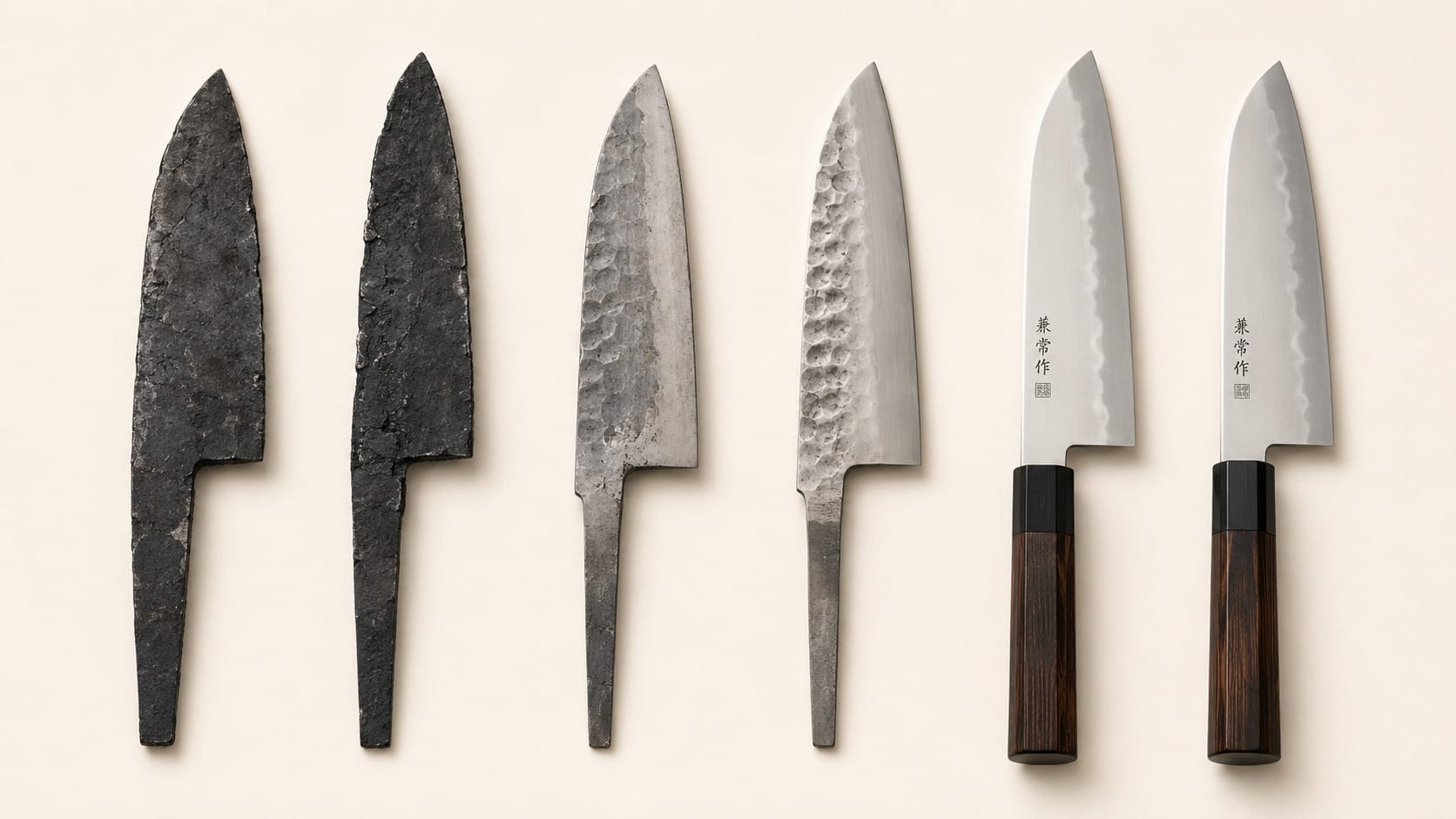
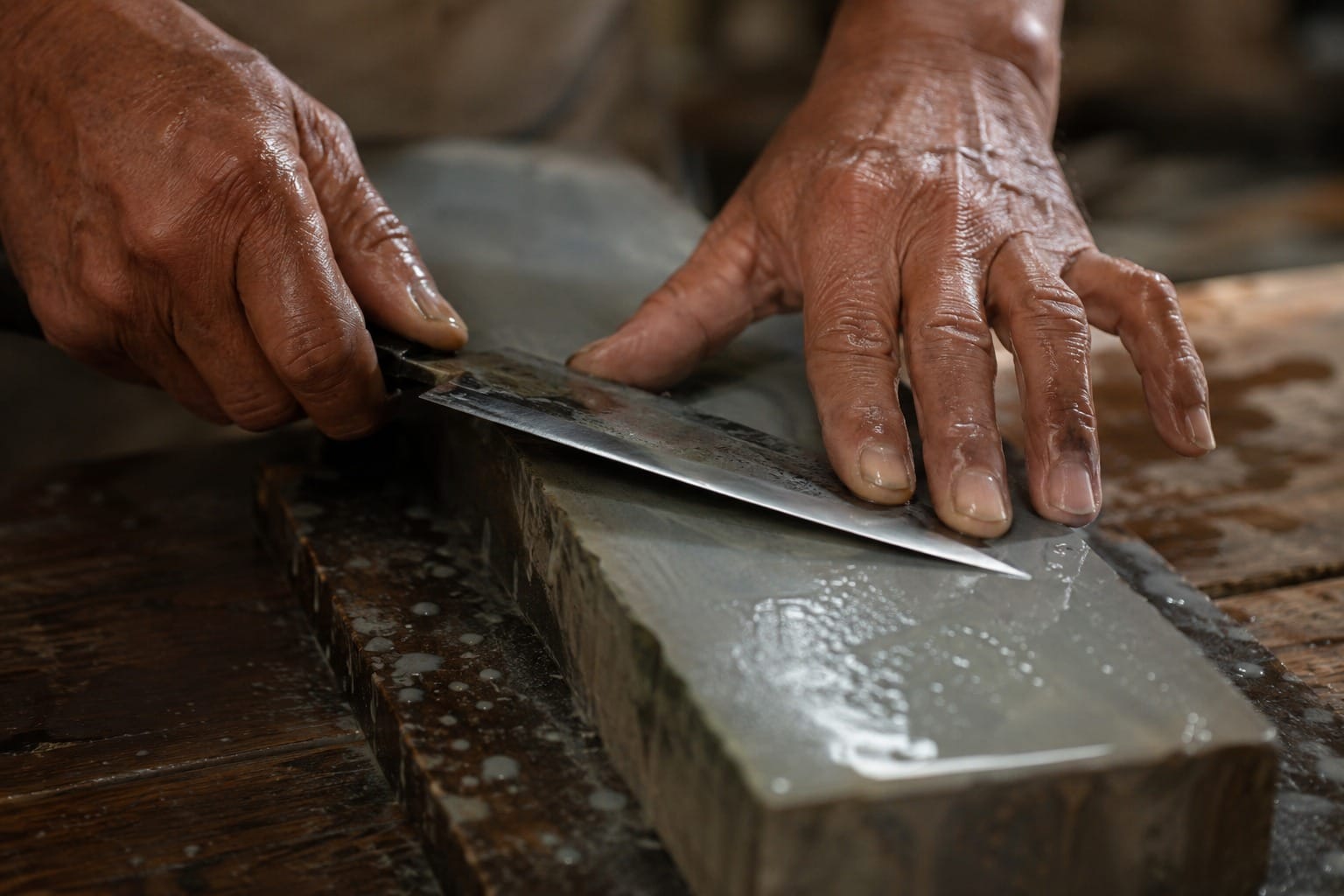
What makes Sakai different from other knife-producing regions is the division of labor. A single knife passes through three independent workshops. A forger shapes the steel. A sharpener gives it an edge. A handle maker fits it for the cook's hand.
Each master runs their own business. Each one stakes their reputation on the finished blade.
This system produces knives that supply over ninety percent of Japan's professional kitchens. The market trusts the quality. But the story has never been told in English.
That's the gap. Not a product gap. A language gap.
Step one: positioning
Positioning comes first. Before the name, before the logo, before the website. Positioning is the answer to one question: why should someone choose this brand over every other option?
I use a tool called the "only" statement. It forces you to fill in a single sentence: "We are the only _ that ___." If you can't complete it, your positioning isn't sharp enough. If your competitor could say the same thing, it's not real positioning.
We landed here:
"The only traditional Japanese chef's knife brand where three independent masters (a forger, a sharpener, and a handle maker) each stake their name on a single blade."
That sentence names the category: traditional Japanese chef's knives, not "knives" or "Japanese blades." It draws the line: three independent masters, not a factory. And it raises the stakes: each one is personally accountable.
No other English-language knife brand can say this. The mass-market brands don't use this system. The boutique Western brands that source from Japan obscure the makers behind their own brand name. The positioning is real because it's exclusive to this way of working.
The customer
A clear position needs a clear customer. Not "anyone who likes cooking." One person.
She's a design-conscious home cook. Thirty to fifty years old. High household income. She already owns good cookware: a Le Creuset, a Staub, or an All-Clad. She pays more for things that work well and look right in her kitchen.
She wants a Japanese chef's knife. She's read about them. She knows they're sharper, lighter, and different from Western knives. But she doesn't know which brand to trust.
She doesn't speak Japanese. She's seen dozens of online stores selling "authentic Japanese knives" and can't tell which ones are real. She's willing to spend two hundred to four hundred dollars. She wants to feel confident she's not overpaying for something ordinary.
The problem
The best Japanese chef's knives are locked behind a language barrier. This customer either settles for a mass-market brand she can find in English. Or she overpays for a Western-marketed knife that uses "Japanese-style" as a label rather than a fact.
She doesn't need a better knife to exist. She needs a way to find the good ones and trust what she's buying.
Step two: naming
The company's real name can't travel. It's Japanese, it's hard to pronounce for English speakers, and it carries no meaning outside Japan. The rebrand needs a new name.
The name I chose is Ren.
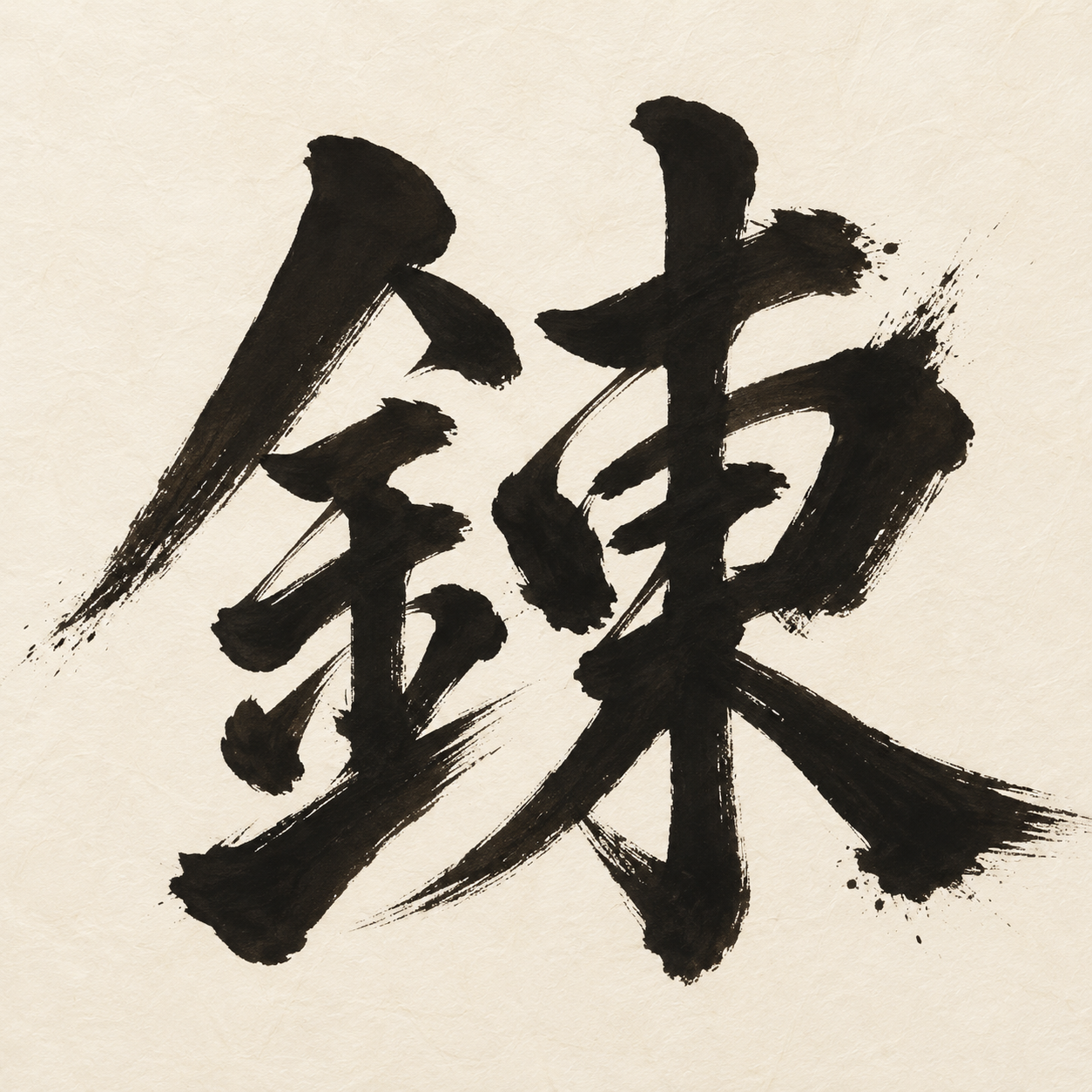
In Japanese, 錬 means "to forge" or "to refine." It describes the physical act of shaping steel through heat and pressure. That's literal. For a knife brand, the name carries its meaning on the surface.
In Chinese, ren means benevolence or humanity. It's the highest virtue in Confucian thought. In Swedish, "ren" means clean or pure. In Korean, it carries connotations of kindness.
Across every major language I checked, the word has no negative meaning.
I also checked the two other candidates I considered. One had a homophone in Japanese that means "house fire." The other was near-identical in sound to the name of a biblical figure remembered for plotting genocide. I disqualified both.
Name audits across languages aren't optional. They're a requirement.
Ren Knives. The domain is renknives.com. The social handle is @renknivesofficial across all platforms. One syllable, globally easy to say, and a meaning that maps directly to the craft.
Step three: identity
Identity is the visible layer. It's what the brand looks like, sounds like, and feels like in the customer's hands. Every identity decision flows from positioning. If the positioning says "three independent masters staking their names on a single blade," then the identity has to feel handmade and serious.
What it must not look like
Every English-language Japanese knife seller operates inside the same visual vocabulary. Dark backgrounds. Dramatic close-ups of Damascus steel patterns. Red and black color schemes. Wave motifs. The word "tradition" repeated until it loses meaning.
That aesthetic signals "enthusiast marketplace." It talks to knife collectors, not to a design-conscious home cook choosing her first serious blade.
Ren Knives belongs in the broader world of luxury brands where the product is a physical object rooted in craft, not among other knife brands. Think Aesop, Le Labo, Bottega Veneta. Brands where restraint is the signal.
The kanji mark
The brand uses a calligraphic rendering of 錬 as its standalone icon. This works as a favicon, a social media profile image, a packaging stamp, and a stamped mark on the waxed-canvas knife roll.
The precedent is premium Japanese tea. Ippodo, a centuries-old Kyoto tea house, uses brushed-calligraphy kanji as a primary visual element on its tins and packaging. Western consumers respond to kanji as art. Japanese-literate customers read the literal meaning.
The mark works on both levels without explaining itself.
Color palette
Five colors. All drawn from the materials of the workshop.
Hagane (#4A5568): the blue-grey of carbon steel before its first patina. Primary text and anchoring color.
Kinuta (#C4B5A0): wet natural sharpening stone, warm putty grey. Backgrounds and secondary surfaces.
Sumi (#1C1917): charred magnolia handle wood, near-black. Headlines and the kanji mark.
Tama (#D4D4D8): the flash of a freshly polished blade edge, soft silver. Accents and metallic applications.
Washi (#F5F0EB): unbleached Japanese paper, warm cream-white. Primary background and negative space.
No red. No gold. No saturated color. The palette feels like standing in a workshop where natural light falls on steel, stone, and wood.
Typography
A warm serif with personality for the wordmark and headlines. Something in the character of Freight Display or Cormorant Garamond: editorial, slightly high-contrast, with rounded serifs. Not geometric. Not cold.
A clean sans-serif for body copy that steps back and lets the content lead. Something like Söhne or Inter.
For Japanese text (steel type names, maker credits, process terms), Noto Serif JP at a lighter weight. Present but not decorative.
Photography direction
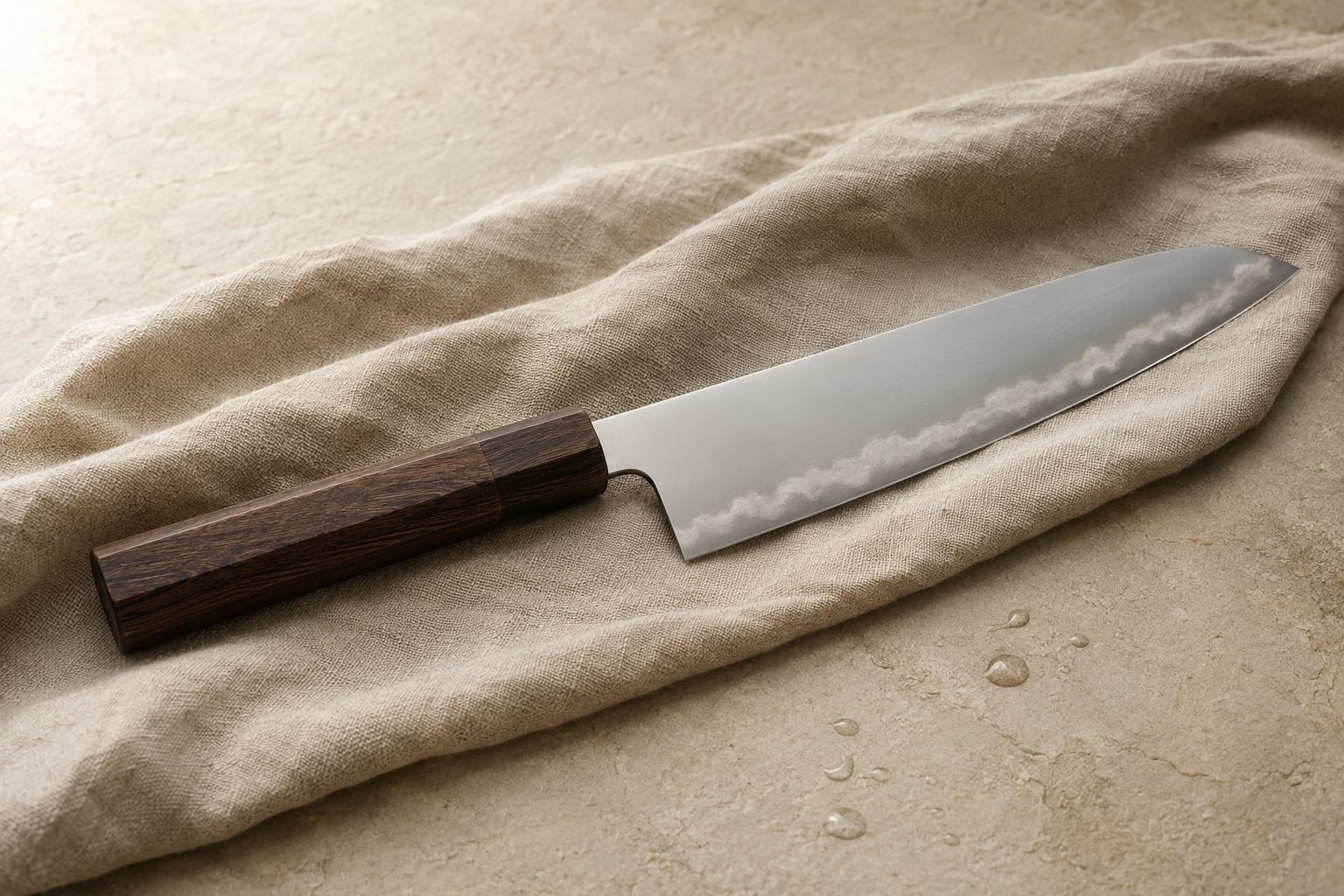
Product photography: natural light, shot on raw materials (linen, wet stone, unplaned cypress). Never on a black background. Never with dramatic shadows. The aesthetic comes from Kinfolk and Cereal magazine. Still, quiet, generous negative space, slightly warm color temperature.
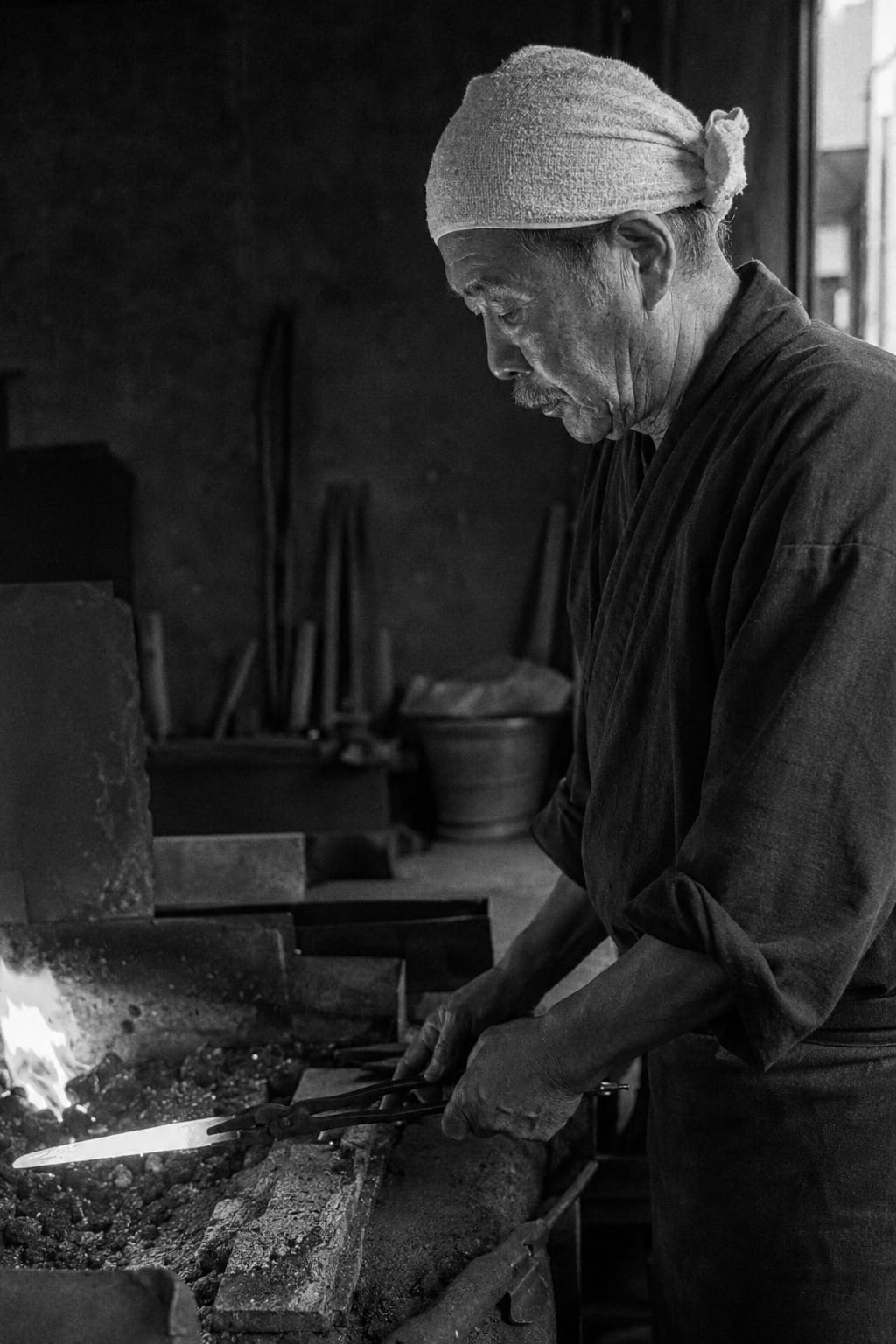
Process photography (the forge, the sharpening wheel, hands at work): documentary style, not staged. Kodak Portra 400 film stock feeling. Warm, slightly faded, with visible grain in the shadows. These images should feel like someone walked into a working workshop with a camera. No art direction. No posing.
Packaging
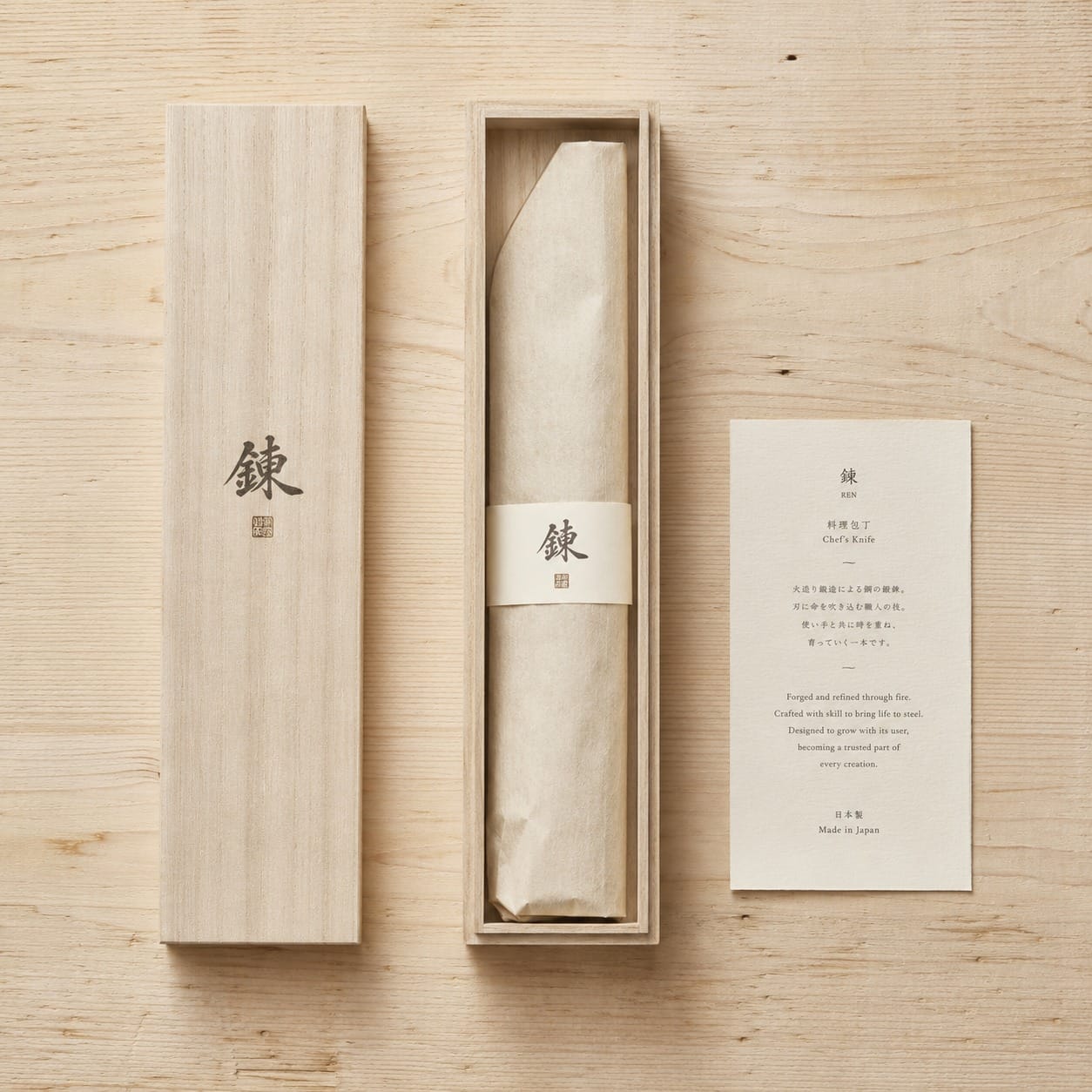
The knife arrives in a paulownia wood box. Inside: the blade wrapped in washi paper, sealed with a paper band stamped with the 錬 kanji. A single card on heavy cotton stock, printed by letterpress, lists the names of the three masters who made this specific knife.
No plastic. No foam inserts. No promotional material. No discount code for next time. The unboxing should feel like receiving a gift from someone who respects your intelligence.
This is where tsutsumi (the Japanese concept of wrapping as an expression of care) comes alive. The packaging tells the customer: we thought about this moment. We cared about how it would feel to open this box. That care is the same care that went into forging the blade.
Step four: storytelling
Positioning tells you where the brand stands. Identity gives it a face. Storytelling is what it says and how it says it.
I structured the storytelling layer using the Golden Circle, a framework Simon Sinek developed. The idea is simple: most brands communicate from the outside in. They start with what they sell, then explain how they make it, and hope the customer figures out why it matters.
The brands that build real loyalty do the opposite. They start with why.
Why
The people who make the world's best tools deserve to be known by name.
How
Three independent masters, each running their own workshop in Sakai, each staking their reputation on every blade. We bring their work directly to your kitchen, with nothing lost in translation.
What
Handmade Japanese chef's knives. Made to order. Shipped worldwide.
The "why" carries the weight. A customer who only hears the "what" sees another knife store. A customer who hears the "why" first sees a brand with a point of view.
She buys because she agrees with the belief. The knife is secondary.
The brand narrative
The story reads like this on the site. It's written for someone who may not speak English as a first language and may never have heard of Sakai:
The best kitchen knives in Japan aren't made in factories. They're made in Sakai, a small city near Osaka where blade makers have worked side by side for over six hundred years.
In Sakai, no single person makes a knife alone. Three masters share the work. A forger shapes the steel. A sharpener gives it an edge. A handle maker fits it for your hand. Each one runs their own workshop. Each one signs their name to the finished blade.
These knives supply more than ninety percent of Japan's professional kitchens. But outside Japan, the makers have no names. No faces. No voice. The language barrier keeps them invisible.
Ren Knives exists to fix that. The knives don't change. You get to meet the people who make them.
Short sentences. No jargon. No word that would stop a non-native reader mid-sentence. The meaning is clear on the first pass.
The three masters
You can't build a brand around the idea that "the makers deserve to be known" and then leave the makers anonymous. Here are the three.
Nakamura Tetsu, the forger. Third-generation blacksmith. Works in Aogami Super and Shirogami #1 carbon steel. His workshop runs at 780°C (about 1,436°F) before sunrise.
Yoshida Kōichi, the sharpener. Forty years on natural sharpening stones. He sets the edge geometry (the angle, the grind, the bite) that defines how the knife feels in your hand.
Mori Haruki, the handle maker. He works in burnt chestnut and magnolia. The handle is the only part of the knife that touches your skin every time you cook.
Each profile is short and specific. No grand claims. No "living national treasure" language. Just what they do, how long they've done it, and one detail that makes them real.
Brand voice
Ren Knives speaks in short, plain sentences. Warm but not chatty. Specific but not technical. The voice assumes the reader is smart but may not speak English as a first language.
A sample product description:
210mm (about 8.3 in.) Gyuto. A general-purpose chef's knife.
Forged by Nakamura Tetsu in Aogami Super carbon steel. A hard, fine-grained metal that holds its edge longer than most.
Sharpened by Yoshida Kōichi on natural stone to a 70/30 edge. The right side does more of the cutting. This gives you a cleaner slice through dense vegetables and boneless proteins.
Fitted with a burnt chestnut handle by Mori Haruki. The octagonal shape keeps the knife from rolling and tells your hand which way the blade faces, even without looking.
This blade will darken with use. That's the steel reacting to food and moisture. It's normal. It's yours.
Ships with a care guide and the names of all three makers.
No superlatives. No "exquisite." No "unparalleled." The facts do the selling. The names do the trust-building.
Content pillars
Three topics. Each one maps to a layer of the brand.
The makers. Profiles of the forgers, sharpeners, and handle makers. Not hero worship. Workday portraits. What their workshop looks like at six in the morning. What steel they prefer and why. How they test an edge. This is content no other English-language knife brand can produce, because they don't have the relationships.
The material. Specific writing about steel types, handle woods, and sharpening stones. Not encyclopedic. Each piece tells you why a material choice matters to your cooking. "Aogami Super holds an edge longer, but it darkens faster. If you want a blade that changes with you, this is the steel."
The practice. How to use and care for a Japanese knife. Sharpening technique. Cutting board pairing. The idea of maintaining a tool for decades rather than replacing it. This is where the brand's deeper belief extends to the customer's own behavior.
The touchpoint chain
Every moment from discovery through ownership, designed to lead with why.
Discovery (Instagram, editorial features, word of mouth). The feed is not product-shot after product-shot. It alternates: a maker portrait, a material close-up, a finished blade, a hand cutting vegetables, a workshop detail. No text overlays. No prices in captions. Every image could hang on a wall.
Consideration (the website). The customer arrives and meets the brand story before the product catalog. She reads about the three-masters system. She understands why these knives cost what they cost before she sees a price tag.
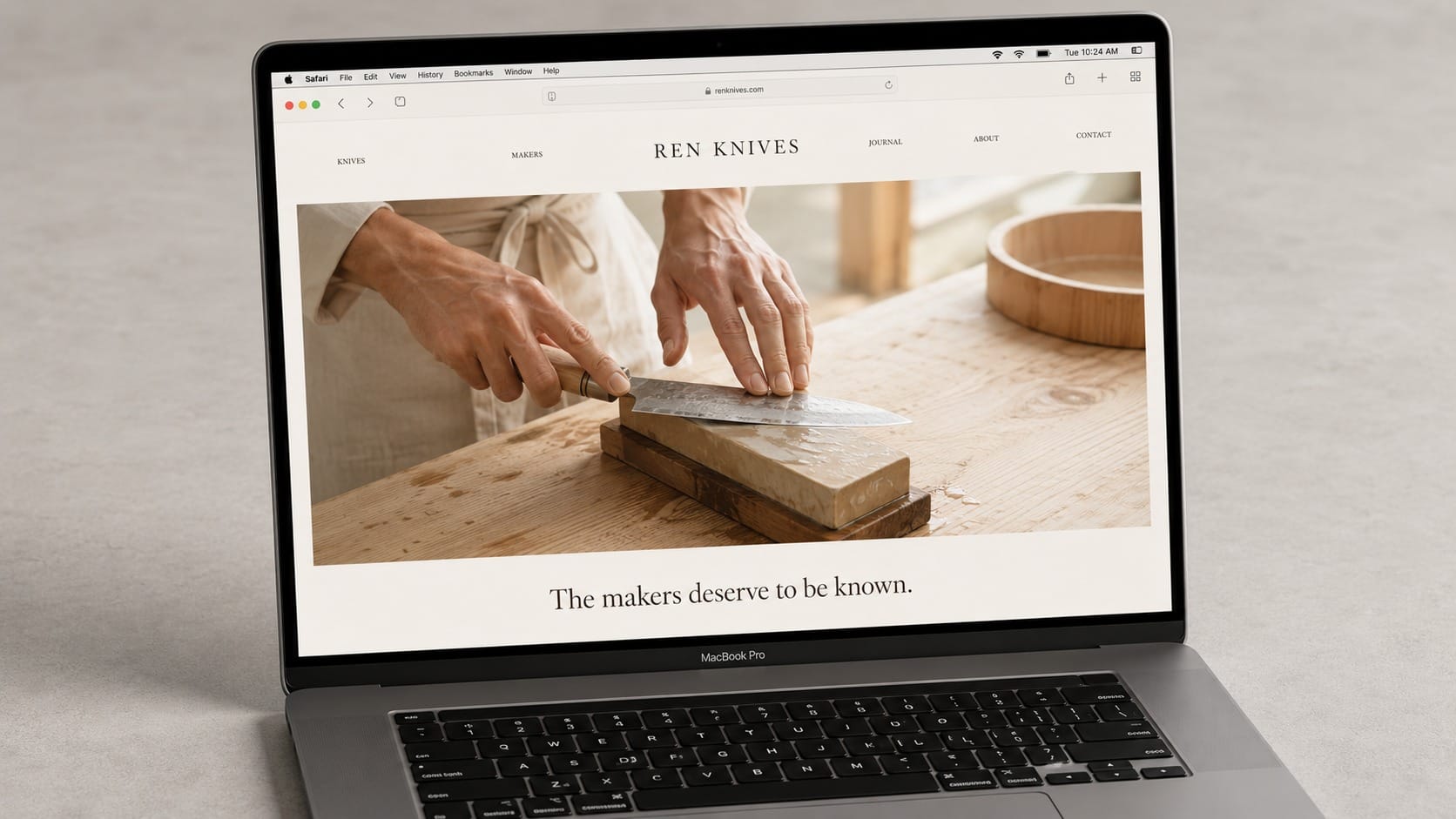
Purchase (checkout). Clean and minimal. No pop-ups. No countdown timers. No discount codes floating in from the corner. A note at checkout: "Your knife will be made to order. Estimated delivery: six to eight weeks." The wait is a feature. Your blade doesn't exist yet because it's being made for you.
Unboxing. The paulownia box. The washi wrap. The 錬 stamp. The letterpress card naming the three masters. No promotional inserts. No "review us on Google" card. The moment is pure.
Ownership. The care guide is itself a piece of storytelling, written in the brand voice. It covers sharpening, storage, and the idea of patina as a record of use. A follow-up email thirty days later doesn't ask for a review. It shares a short profile of the forger who made their blade.
Advocacy. When someone asks "where did you get that knife?" the owner can answer with a name. Not "some Japanese brand" but "a forger named Nakamura in Sakai made it." The three-masters card makes this transfer of story easy. It gives the customer a fact worth sharing: three different craftsmen each put their name on my knife.
What this demonstrates
The sequence matters. Positioning first. Then identity. Then storytelling. Each layer depends on the one before it.
Skip positioning and the identity is decoration. It looks nice but doesn't mean anything. Skip identity and the storytelling has no visual language to live in.
Start with storytelling and you end up sounding like everyone else. That's what most brands do: posting on Instagram before they've figured out what they stand for.
The system works the same way whether the brand is a two-hundred-year-old knife maker or a startup selling supplements. Define where you stand. Give that position a face. Then tell the story.
The knives were always good. They just needed a voice.
Sources and further reading
Sources cover the product category and regional craft tradition. No brand-specific sources are linked; see the note at the top of this article.
-
Appeal of World Renowned Sakai Knives
Sakai Tourism & Convention Bureau. Municipal tourism guide covering the history of blade craft in Sakai from the 15th century, the division of labor between forger, sharpener, and handle maker, and the 98% domestic market share among professional chefs. -
Inside the World of Sakai Knife Artisans: Craftsmanship Born from 600 Years of Tradition
Hasu-Seizo. Manufacturer article with a detailed look at the independent workshops, the three-master system, and how each craftsman stakes their reputation on the finished blade. -
One of Japan's Three Major Cutlery Producing Regions
Discover Osaka (Osaka Convention & Tourism Bureau). Regional tourism article covering the history from tobacco-knife production through the Edo period to the Minister of Economy traditional craft designation. -
Making a Kitchen Knife as a Traditional Craft at Sakai, Osaka
The KANSAI Guide. Regional guide covering the process of forging, sharpening, and handle-fitting as experienced by visitors, with context on Sakai's role within Japan's broader craft world. -
How Great Leaders Inspire Action
Simon Sinek, TED Talk, September 2009. Presentation covering the golden circle framework (Why / How / What) referenced in the storytelling section. The source of the principle that brands which lead with purpose build stronger loyalty than those which lead with product.